
The decisive election victory for the Narendra Modi-led National Democratic Alliance has created a conducive environment for policy actions and should help in economic recovery, Reserve Bank of India Governor Raghuram Rajan said on Tuesday.

PSU divestment, LIC IPO, fiscal deficit: Budget 2021 marks a clear change in the Modi government's stance from fiscal conservatism to growth orientation.

BSE Realty index zoomed by almost 7% followed by counters like Metal, Oil & Gas, Auto, Banks, Auto, Healthcare and Power, all surging between 1-5%.
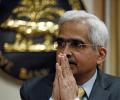
Uncertainty is emerging as the only certainty, said RBI Governor Shaktikanta Das as he emphasised on continued policy support at the December MPC meet during which members expressed concerns over spread of the Omicron variant of coronavirus, as per the minutes of the rate-setting panel released on Wednesday. After three days of deliberations, the six members of the Monetary Policy Committee (MPC) on December 8 unanimously voted for status quo on policy rates for the ninth consecutive time. At the meeting, the RBI Governor said risks stalking the global economy have amplified with rapid spread of the virus mutations, including the Omicron variant, leading to countries scrambling for restrictions.

India must be prepared for a big, fat fuel import bill in FY23 - barring any further avatars of the Covid virus - as refiners crank up runs, or crude processing rates, to meet the growing demand for fuels, and crude prices soar. Capacity additions by an Indian state-run refiner will reinforce the need for foreign crude. Demand for all fuels is expected to increase by 3-8 per cent next fiscal from 2021-22, reaching pre-pandemic levels, according to analysts and industry experts.

People have said they would be inclined to travel for leisure during the festival and year-end season.

Sensex had opened on a shaky note at 15,838.63 but managed to recoup all the losses and rebound into the positive terrain for a short while to touch a high of 15,957.06. However, the weak opening of the European markets, coupled with subdued Asian markets, pushed the index into the red and slip to a low of 15,330.56. Intraday volatility on the bourses was high and the index moved in the range of 627 points in the day.

Stockmarket Gurus Raamdeo Agrawal, Manish Gunwani, S Naren and Nilesh Shah discuss their favourite themes for the New Year.
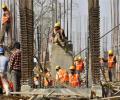
India's economy has bounced back amazingly from the Covid-19 pandemic and nationwide lockdown over the last one year, but it is not out of the woods yet, according to the World Bank, which in its latest report has predicted that the country's real GDP growth for fiscal year 21/22 could range from 7.5 to 12.5 per cent.

As the second wave of the Covid-19 pandemic abates, India's automakers are hopeful of a quick recovery in sales volumes, led by better rural sentiment, low interest rates, improved availability of finance and a gradual uptick in business and economic activity. In fact, companies have started to ramp up production already, encouraged by high order books and the growing preference for private transport in both rural and urban areas as a means to avoid infections. In early April, the industry had been bullish as the sales trend for March showed that the effects of the Covid-19 pandemic had been left behind. The total vehicle sales had grown by 77 per cent, albeit on a lower base, and for the past few months, sales had consistently touched 300,000 units per month.
Earlier, politicians thought voters demanded a ceiling on inflation. Now, people want a floor on growth.

The global economy may just be entering a new phase.

Former Reserve Bank of India (RBI) Governor Raghuram Rajan says the government should take advantage of the peaks in the Indian equity markets right now and sell stakes in PSUs while prioritising spending to get the economy back on track. The upcoming Budget for the fiscal year beginning April 1 should look to provide "relief to the poorer households and small and medium enterprises," he said. And then move on to getting the economy back on track.
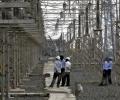
The temporary disruptions (primarily to private consumption) caused by cash shortages accompanying the currency exchange initiative are expected to gradually dissipate in 2017 as cash shortages ease, the International Monetary Fund said in its regional economic outlook.

Other gainers included Kotak Bank, HCL Tech, ONGC, Asian Paints, Vedanta, HDFC Bank, Bajaj Finance, Maruti and TCS, gaining up to 1.41 per cent. Sun Pharma was the top loser, cracking 8.58 per cent.

Not surprisingly, equity investors are bidding-up stock prices across sectors and the broader market is now more valuable than pre-Covid levels.

Top gainers in the Sensex pack included Bharti Airtel, Tata Motors, IndusInd Bank, Kotak Bank, Hero MotoCorp, Asian Paints and PowerGrid, which rose up to 2.53 per cent.
India's economic growth, which dipped to 9-year low of 6.5 per cent in 2011-12, is expected to rebound from October, Chief Economic Advisor Kaushik Basu said.

The biggest worry is not the shrinking of the labour market, but the collapse of good jobs.

The rupee had closed at 64.83 last Friday.

With an epic battle of billionaires for supremacy in one of the world's most prolific markets and a pandemic-propelled surge in online shopping in the background, India's nearly trillion-dollar retail market is hoping to touch 85 per cent of the pre-COVID business in the first half of the New Year. In a year when the COVID-19 carnage ripped apart the retail business, circa 2020 will best go down for the unravelling of the war between Jeff Bezos, the world's wealthiest man, and richest Indian Mukesh Ambani for pre-eminence in the booming market that is estimated to reach $1.3 trillion by 2025. It all started with Ambani's Reliance Industries agreeing in August to buy assets of the nation's second-largest retailer for Rs 24,713 crore, just a year after Bezos' Amazon purchased an indirect stake in the indebted Future Retail.

Wiping off nearly Rs 4 lakh crore of investors' wealth during the day, benchmark Sensex crashed on Friday.
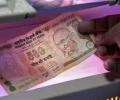
Rupee falls 5 paise against dollar, ends at 61.92.

Gold prices staged a smart rebound to surpass the psychologically important Rs 28,000 milestone.
In the broader markets, the BSE Midcap and Smallcap indices extended gains and were up over 1% each

Pharma major Sun Pharma remained the worst loser in the Sensex pack for the second day in a row after reports that regulator Sebi may reopen the insider trading case against the company.
Among the Sensex pack, Yes Bank, L&T, HDFC, RIL, HDFC Bank, PowerGrid and Coal India were the biggest losers -- falling up to 2.43 per cent.

Forecasts of a further rise in bullion prices keep Indians away from selling gold.
Rupee closed at 61.86 against the dollar on Tuesday.

Ajit Mishra, vice president, Research, Religare Broking, answers your queries
The low global crude prices have helped narrow the current account deficit to just 0.2 per cent of GDP in the previous January-March quarter.

With this subdued forecast, India is likely to record its worst growth performance since the 1991 liberalisation. However, it is among the only two major economies, which will register a positive growth rate in 2020. The other being China, for which the IMF has projected a growth rate of 1.2 per cent.

Recovering from early losses, the rupee on Friday ended marginally higher at 64.81 against the US dollar.

The rights issue price has been set at Rs 1,257 a share, a discount of nearly 14 per cent to the last closing price of Rs 1,459. The company had set May 14 as the record date for the rights issue, which meant shareholders as on that day would be eligible to apply. Shareholders will be able to apply for one share for every 15 shares held.
Attributing the growth to an upswing in consumption and investment, the World Bank has said India will continue to be the fastest growing major economy in the world.
The UN Conference on Trade and Development (UNCTAD) said in a report on Monday that a lower but positive economic growth in India in the post-Covid-19 pandemic period and India's large market will continue to attract market-seeking investments to the country. The World Investment Report 2020 by UNCTAD said that India was the 9th largest recipient of FDI in 2019, with 51 billion dollars of inflows during the year, an increase from the 42 billion dollars of FDI received in 2018, when India ranked 12 among the top 20 host economies in the world.

The hit to economic activity will be mostly confined to the first quarter. And a third wave, if it materialises, is unlikely to be hugely disruptive for the economy, predicts T T Ram Mohan.

The rupee touched a high and low of 65.91 agaisnt the greenback during the day.

'We have lived through 10% plus inflation in India and we are aware of the economic pitfall.' 'With the RBI now having formally adopted an inflation target range, they cannot turn a blind eye to the impending risks.'
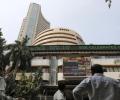
The broader Nifty declined by 73.90 points, or 0.71 per cent, to end at 10,378.40.
